
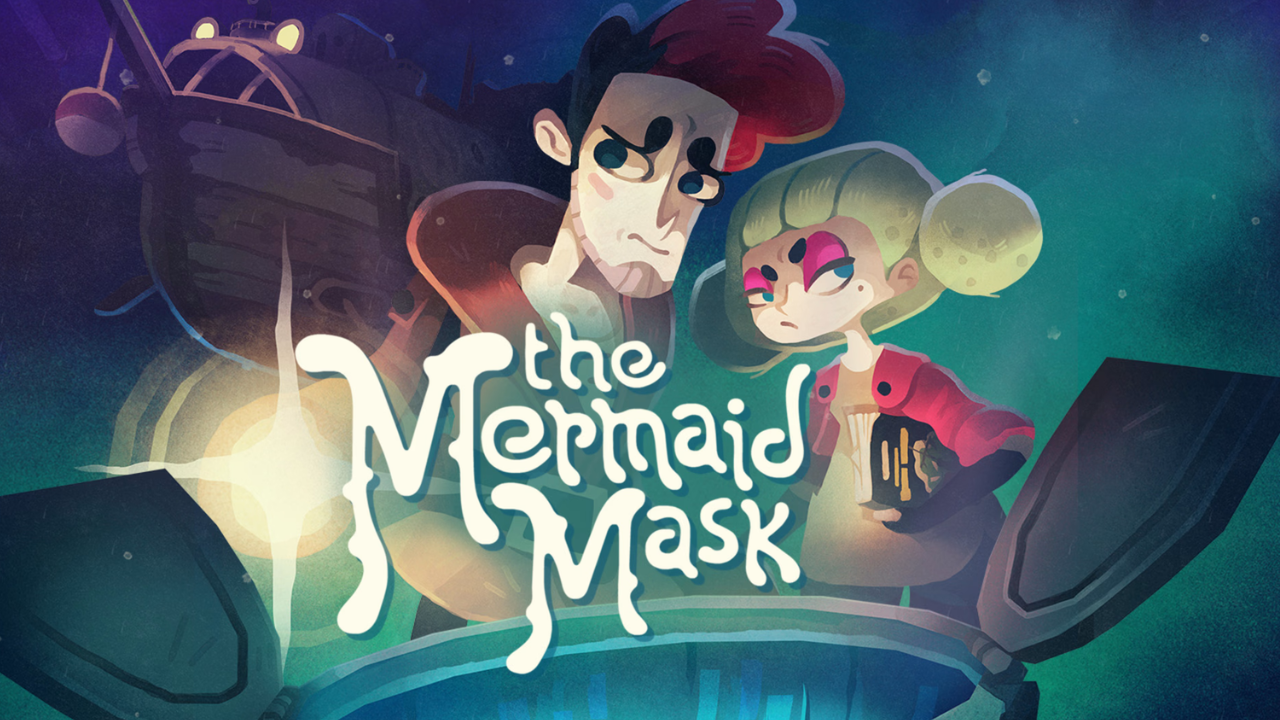
The Mermaid’s Mask is the latest entry in the Detective Grimoire series of mystery-adventure games by SFB Games. Similar to the previous entry, Tangle Tower, the game follows Grimoire and his partner Sally as they are hired to investigate a mysterious murder in an unusual scenario, featuring a colourful cast of eclectic characters to interrogate. Tangle Tower was already a very solid adventure game, and the team at SFB Games has polished their craft further with The Mermaid’s Mask. It boasts sharper writing, a very memorable cast of characters, and a whole package that comes together brilliantly.
In any narrative adventure game, the story and presentation are the most important aspects, but that does not mean the gameplay takes a back seat. As a sequel that stays close to its predecessor, it plays much the same way. Grimoire and Sally move from room to room, clicking on objects to find clues while offering colourful commentary. These findings are presented to suspects during interrogations; when nothing remains to ask, the pair move on to the next room and character to repeat the process.

This formula is broken up by the occasional puzzle or, once enough evidence is collected, an interrogation. The approach to puzzle design in The Mermaid’s Mask is very strong, as each challenge is logical and self-explanatory. The objective of every puzzle is clear at a glance, eliminating the need for lengthy text explanations. Grimoire and Sally never need to return to a puzzle later, as each one can be solved immediately purely based on visual clues. And, if incorrect answers persist, the game organically provides a hint. The puzzles were consistently solid throughout the game, and each was deeply satisfying once solved.
Interrogations are more traditional for this genre: they offer Grimoire and Sally the opportunity to reveal the mystery behind each subject. The Mermaid’s Mask treats its audience with respect; if something unusual stands out in a piece of evidence or testimony and the player notices it, chances are one of the detectives did as well, even if the dialogue doesn’t directly point it out at the time. That said, if a player didn’t notice a detail on a piece of evidence, then these sections can easily be brute-forced; there is no consequence or fail state for just spamming each piece of evidence until the right one is presented.
The Mermaid’s Mask excels at guiding investigators through evidence during interrogations and selecting the correct item. When a specific page or side of the clue needs to be shown, a helpful notification appears, encouraging the player to look a little closer. A standout feature of this system is its key evidence. In many mystery games, holding a vital piece of evidence without being able to present it because a story trigger remains unactivated is often frustrating. The Mermaid’s Mask addresses this issue by having Sally and Grimoire state that the evidence is correct and should simply be held back for a moment. This one line works wonders psychologically, rewarding sharp intuition while encouraging patience for the right moment. There is no penalty for discovering the truth early, which is a common pitfall in this genre.

Another new feature for this series is the use of 3D. Clues are now 3D objects, meaning Grimoire and Sally can spin and inspect them from all angles, opening up possibilities for clever mini-puzzles and evidence presentation. Occasionally, Grimoire and Sally must analyse two separate clues by flipping and turning them to reveal their significance, and that added dimension enriches the investigation.
The addition of 3D also significantly elevates the game’s presentation. Each character’s alibi is presented in 3D, while specific flashbacks and key moments appear in a diorama-like style that enhances immersion. Backgrounds and character models remain 2D (or at least appear to be; they might actually be highly stylised 3D) and look stunning. The visual style closely resembles Tangle Tower, but animations show clear improvement with greater variation. Characters animate far more fluidly, bringing out the fantastic designs that instantly convey a character’s personality and demeanour.
Ultimately, the real star of any mystery game is the story. This overview remains strictly spoiler-free. Grimoire and Sally receive a case in the rainy, near-abandoned fishing town of Silkworm-on-Sea to investigate the murder of the enigmatic Captain Magnus Mortuga. It is a classic locked-room mystery elevated by its unique setting: a submarine. Setting the entire game aboard a submarine creates an atmosphere rarely found in other mystery titles, particularly since there is no opportunity for the killer to escape.
The game leans into its nautical setting to great effect, drawing on the myths and tales of old sailors, the sort heard in the corner of a wet pub. This comes through most effectively surrounding HER and in every suspect’s reaction to that key piece of early-game evidence. This element gives the otherwise lighthearted, comedic tone an eerie edge. The contrast proves memorable, balancing humour and tension with skill.
Character variation in The Mermaid’s Mask is equally impressive. Rather than focusing on two families, the cast consists of a group of strangers of various ages living together aboard the submarine for different reasons. An actor, a writer, an illusionist, and a shipwrecked shop owner all feature, and each character’s personality shines through.

One minor issue lies in how the story references the previous entry, Tangle Tower. While cameo appearances can be entertaining, reusing the Fellow family and characters from the earlier game does a slight disservice to the narrative. It makes the world of Detective Grimoire feel smaller, giving two unrelated cases a common familial connection that carries no actual weight in the plot. The reference feels designed purely for existing fans to recognise, yet even for returning fans, the inclusion feels unexpected and slightly confusing.
One line mentioning the murder victim of Tangle Tower creates the impression that crucial dialogue has been missed. The sudden mention prompts confusion until it becomes clear that it is merely a nod to the past game. The line falls flat and easily misleads newcomers, making an evidence update seem relevant when it carries no bearing on the current case.
Outside of those minor moments, the narrative remains thoroughly engaging, culminating in a spectacular final act. Story chapters feel somewhat unnecessary, as pacing varies and chapter breaks carry little structural weight, though one specific transition elicits a genuine chuckle. Ultimately, this remains a minor flaw in an otherwise stellar mystery.
The Mermaid’s Mask is another outstanding entry in the Detective Grimoire series, pushing it into the front ranks of the modern mystery genre. Grimoire and Sally comfortably stand alongside genre icons like Phoenix and Maya, Layton and Luke, George and Nicole, or Protag and Ayumi, leaving high anticipation for whatever tale SFB Games spins next.
The Mermaid's Mask: The Mermaid's Mask is up there with some of the best the mystery game genre has to offer. A memorable cast of characters, great dialogue and presentation, and a story that all comes together in the final act to leave the player satisfied. – NantenJex