
This review code was provided by Top Hat Studios.
With Nintendo taking the Legend of Zelda series in an open-world direction, something is needed to fill the gap in people’s hearts that the classic Zelda formula once held. Under the Island, developed by Slime King Games and published by Top Hat Studios, sets out to do just that, and it accomplishes its goal remarkably well. While flawed in places, the core elements that make classic Legend of Zelda so memorable are here, wrapped in a story of teenage adventure.
Right off the bat, Under the Island feels like the developers took the vibes of The Legend of Zelda: The Wind Waker and translated them into a 2D game. It is not quite like The Minish Cap (although visually, both are beautiful), instead leaning into a relaxing tropical island vibe. It features a cozy beach town and a laid-back demeanor where the greatest danger is the occasional food thief.
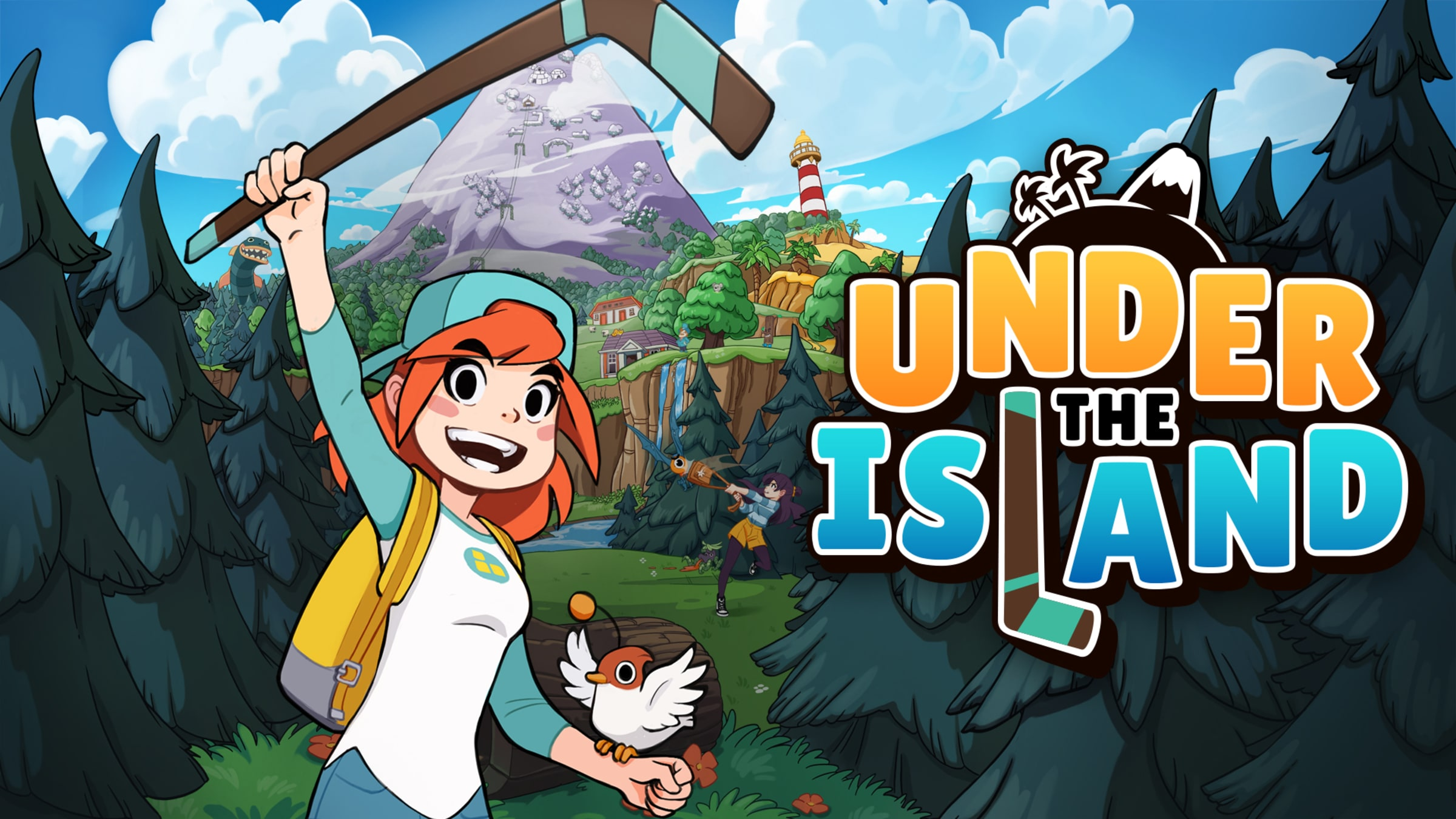
Nia is the game’s young, red-headed protagonist. She has been forced to spend the summer on the island by her two researcher parents. They are investigating mysterious ruins that Nia, of course, falls into and discovers the secrets of alongside a local girl her age named Avocado. The two girls meet a mysterious birdman of ancient origins who tasks them with finding four MacGuffins needed to stop the island from sinking. Armed with a hockey stick instead of a legendary sword, Nia must explore the island to save it and relieve the boredom of being away from the excitement of the mainland.

It is a decent setup to get Nia on her way, although the opening section might be a tad too long. Unlike Link, Nia is not a silent protagonist. The stop-and-start dialogue scenes, combined with too much freedom to wander a town that has nothing to offer at that stage in the game, can make the beginning feel slow.
Once the adventure kicks in, the pacing is solid and somewhat within your control. While the game guides Nia toward the story’s next destination, the only things holding you back from full exploration are missing items or difficult enemies. By taking the long route, Nia can explore most of the overworld as soon as she finds the bombs, provided you can accept hitting dead ends and unsolvable puzzle rooms.
That freedom is most noticeable after completing the first main dungeon. Nia is encouraged to return to Koala Village, the central hub, to see what has changed and get clues, but it is not required. I actually went off the main route and worked most of the way toward the second dungeon, ending up in an area with enemies I could not easily defeat before I finally fast-traveled back to town. I only really returned to upgrade my total health using the four Heart Stones I had found.
Under the Island walks a fine line between giving you the freedom to explore at your own pace while also leading Nia on her story-driven adventure. A downside to this approach is that at least 40% of the island consists of optional areas. You will almost certainly find these before you are ready to solve them, which can result in a feeling of wasted effort. In these cases, it would have been better to seal off an area until the appropriate item is acquired so it is clear that Nia cannot progress yet.

Another complaint involves the day-and-night system. While having specific NPCs appear only at certain times is fine, the implementation is frustrating. The cycle is very short, and at night, the music fades out for ambience. This damages the presentation because the OST is quite good, featuring fun, upbeat tracks. More often than not, you only hear 10 to 20 seconds of a track before it is disrupted. Entering a house or cave, or transition to the night causes the music to change or disappear entirely. Only the later areas and dungeons are large enough for the music to stay consistent, which was disappointing.
The combat is also quite simple. While Nia can learn abilities like a dash attack, and bosses are designed like classic Zelda encounters where a specific item is required, most of the common enemies can be defeated by mashing the attack button. Most items are designed for puzzles rather than fighting, so the enemy variety remains basic. The most interesting addition is the little bird used to grab objects from a distance, which encourages you to multitask using both thumbsticks.
The dungeons and optional areas are very fun. While there is a large underground ruin, most dungeons are contextualized well. One even subverts expectations to the point that I am not sure I would call it a traditional dungeon. These new spins on the Zelda formula, combined with stellar presentation and clever puzzles, are where the game shines. It all culminates in a climactic, if slightly easy final dungeon for those who acquired every upgrade.
Before I conclude, I need to bring up an aspect of Under the Island that definitely was not intentional. I decided to include this in the review just in case it happens to anyone else, as it impacted my enjoyment and initially felt like poor game design until I discovered it was a glitch.
On my way to the second dungeon, the game subtly bugged out. Sprites and tilesets messed up, bushes disappeared, and tiles did not transition naturally. Worst of all, the color of the water changed. This had a major impact on my experience because water uses two colors: light blue for shallow and dark blue for deep water that causes Nia to drown. For me, that difference vanished. It looked like one solid block of color that was not even blue. I did not question it at first because invisible platforms are a Zelda staple. I assumed it was just “swamp water” and that an item would eventually make the path clear. That item never came.

I eventually realized something was wrong when the environments started looking broken, but the game did not fix itself until it crashed. When I rebooted, everything was fixed and I saw the world as intended. Unfortunately, this did not happen until the final stages of the game. I played most of Under the Island in a broken state, and that sucks.
I have decided not to let this affect my score, but it would not be a true review of my time with the game if I did not mention it. Hopefully, it will be patched soon. If you notice the environment looks off, I recommend saving and restarting the game immediately.
Under the Island is a great classic Zelda-like. With Nintendo stepping away from that formula, this game scratches that specific itch. It is not perfect, but it is a great first showing. It has enough side content to make exploration worth it, even if the level design could be tightened to ensure your time is never wasted. The dungeons are all very clever and super enjoyable with unique themes that fit the island setting. There are a host of mini-games that are all pretty solid. The story is okay, but it has engaging enough with interesting characters and dialogue that keeps me hooked; nothing super special though. The OST is great, and the presentation is very pretty. If you’re looking for a good Zelda-like to play in 2026, this is one I would highly recommend.
Under the Island: Under the Island accomplishes its goal of filling the gap left by Nintendo's shift away from the classic Zelda formula. Despite some pacing issues in its long opening and minor frustrations with a short day-and-night cycle, the game delivers a solid experience through its stellar presentation, soundtrack, and unique dungeons. While the combat remains simple and some level design choices can lead to a feeling of wasted effort in optional areas, the game shines with smart puzzles, enjoyable mini-games, and a story-driven adventure full of interesting characters. Ultimately, this title is a great first showing that hits all core aspects of the genre, making it a must-play for fans of old Zelda games. – NantenJex